
When playing online slots, the term Return to Player (RTP) frequently comes up. But what does RTP really mean, and how does it affect your chances of winning? Simply put, RTP is the percentage of all the wagered money a slot game is designed to pay back to players over a long period or millions of spins. If a slot has a 90% RTP, then theoretically for every £100 wagered, the game will return £90 over time.
What RTP Is and What It Isn’t
A common misconception is that RTP is a dynamic figure controlled by the casino or the slot machine itself during play. Some players think the game ‘tracks’ how much it has paid out and adjusts wins accordingly to reach the RTP target. This idea imagines a kind of invisible manager tweaking payouts spin by spin to make sure the game stays close to that percentage.
In reality, RTP is fixed by the game’s mathematical model, based on complex probability calculations programmed into the slot’s design. The slot does not remember past spins or adjust future spins to meet a target. Instead, RTP is an average statistic calculated over a huge number of spins, often millions or billions, across all players over time. Each spin is independent and random, so the RTP outcome can vary significantly in the short term.
How RTP Works in Practice: The Role of Statistics
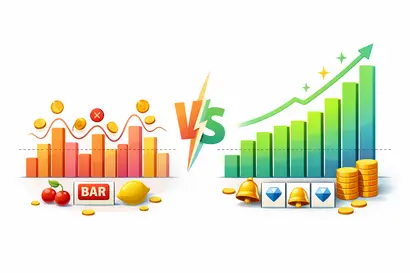
Imagine running a simple slot simulation with only two reels and a handful of symbols, where specific combinations pay out fixed multiples of your stake. When simulating 1,000 spins, the RTP results can vary widely, sometimes from about 88% to nearly 99%. This variation is natural because a thousand spins is a very small sample to calculate a long-term average.
Increasing the number of spins in simulations to 10,000, 100,000, or even millions leads to RTP results that become more consistent and closer to the theoretical value set by the slot’s design. This illustrates the importance of statistical significance: short sessions or a few thousand spins don’t reliably represent the true RTP, whereas millions of spins give a better picture. This is why occasional big wins or long dry spells at slot machines are to be expected – the percentage payout emerges only across very large samples.
The Complexity of Modern Slots
Modern online slots often feature dozens of reels, numerous symbols, multiple paylines, and bonus rounds, which multiply the possible outcomes into the billions. This complexity means that accurately predicting RTP through casual play is practically impossible, and comprehensive testing requires very large numbers of spins. The large number of combinations ensure a rich gameplay experience but also mean RTP is a long-term theoretical average.
How Developers Adjust RTP
Game developers can change RTP by tweaking the payout structure or the distribution of symbols on the reels. For example, increasing the payout for a winning combination or adjusting how often certain symbols appear can raise or lower the RTP. Modifying these parameters affects how often and how much players win on average.
This balance is crucial: if the RTP is too low, players won’t find the game attractive or fair. If it’s too high, the casino and game providers risk losing profitability. As a result, most online slots have RTPs in the range of 93% to 97%, striking a balance between player enjoyment and business sustainability.
Why Understanding RTP Matters for Players
Knowing what RTP really means can help players make informed decisions when choosing slot games. It emphasises that short-term results don’t define whether a slot is ‘fair’ or ‘rigged’ but are random variations in outcomes that will even out over time. Understanding RTP also helps players set realistic expectations about wins and losses.
While no strategy can overcome the inherent house edge, choosing games with higher RTP percentages generally offers better chances of longer-term play and more frequent wins, making the gaming experience more enjoyable.
Conclusion
Return to Player is a vital concept in slot gaming that reflects the average payback a slot is designed to give over extensive play. This figure is fixed by the slot’s mathematical programming and is not influenced by ongoing player results or the casino’s immediate interests. Because RTP is an average calculated over many millions of spins, short-term player experience can vary greatly. Understanding these principles demystifies many misconceptions about slot fairness and helps players make smarter choices in their gaming.
For players interested in learning more about slot types and gaming mechanics, exploring resources about different slot categories and banking methods can be invaluable. For instance, slot types and banking options provide practical knowledge that enhances the playing experience.
